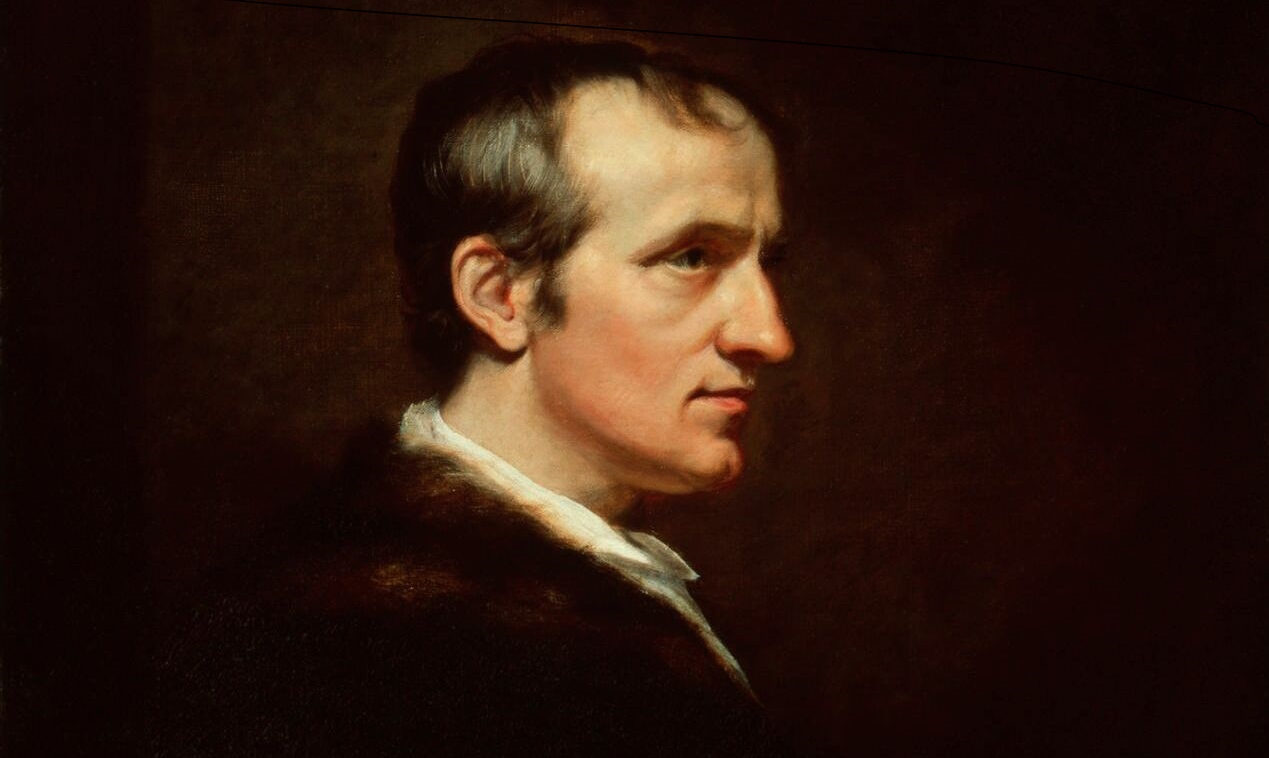

Writer of an anarchist classic and a believer in free education.
William Godwin, Hanway Street, 191 The Strand and 27 The Polygon. Godwin (1756 – 1836) was the first writer ‘to give a clear statement of anarchist principles’ (Marshall 1993: 191). He was one of the first English-language writers to recognize the threat of state-controlled education and to set out the qualities of an alternative, free, education. Today he is perhaps best remembered as the husband of Mary Wollstonecraft (who wrote the feminist classic: A Vindication of the Rights of Woman -1792), the father of Mary Shelley (the author of Frankenstein – 1818) and the father-in-law of the poet Percy Bysshe Shelley (who was influenced by his radical libertarianism).
He gained a great deal of fame (and some notoriety) at the time of the French Revolution through his philosophical work (most notably An Enquiry Concerning Political Justice 1793) and his novels (especially The Adventures of Caleb Williams 1794). His educational thinking was distinguished by:
-
A respect for the child’s autonomy which precluded any form of coercion.
-
A pedagogy that respected this and sought to build on the child’s own motivation and initiatives.
-
A concern about the child’s capacity to resist an ideology transmitted through the school.
He gradually became a rather forgotten figure – although he continued to write. After Mary Wollstonecraft’s death Godwin married again – Mary Jane Clairmont, a neighbour. Together they set up a Juvenile Library in Hanway Street in 1805. They produced a series of pioneering children’s books – some by Godwin, many by other writers and published from the shop in Hanway Street. Later they were to move the business to Holborn – but they were continually beset by financial problems – and the debts rose.
He died in 1836 and was buried, at his request, next to Mary Wollstonecraft.
For a fuller discussion visit: William Godwin on education.
© Mark K. Smith. First published August 7, 1997.
updated: August 14, 2025