Exploring the principles, theory, practice and development of work with groups
introducing groupwork
What is a group? We explore what a group is – and some key dimensions of groups.
What is groupwork? Just what does the process of working with a group involve?
the development of group work
The early history of group work. We examine the emergence of group work in British work with young people and adults during the nineteenth century.
Social group work: formulation of a method, 1920-1936. Kenneth E. Reid explores a pivotal time in the development of the theory and practice of working with groups within social work.
Group work – expansion and professionalism, 1937 – 1955. Kenneth E. Reid explores how group work was increasingly presented as part of social work (as against informal education and recreation) and the fascinating process of delineating its boundaries.
thinkers
Robert Freed Bales, group observation and interaction processes. R. F. Bales pioneered the development of systematic methods of group observation and measurement of interaction processes. In this brief article we survey his contribution.
Grace Coyle and group work principles, theory and practice. Grace Coyle made an extraordinary contribution to our understanding of group work principles, theory and practice. She was also an important advocate for the work within US social work and an innovatory trainer.
George C. Homans, the human group and elementary social behaviour. George Caspar Homans (1910-1989) is widely regarded as the father of social exchange theory. Two of his many books, The Human Group and Social Behaviour: Its Elementary Forms are considered world-classics in sociology. He also made significant empirical and conceptual contributions to small-group research. In this piece A. Javier Treviño explores Homans’ lasting contribution.
Josephine Klein, group work, youth work and exploring English cultures. Josephine Klein was one of the first British-based practitioners to explore group process and working with groups systematically. She also went on to complete a landmark study of family and community life and develop before becoming a psychotherapist. We explore her contribution.
Gisela Konopka and group work. Gisela Konopka (1910-2003) made a profound contribution to the development of social group work and the deepening of practice with children and young people. In this paper Janice Andrews charts Gisela Konopka’s life and assesses her work.
Kurt Lewin, group dynamics and action learning: A seminal theorist who deepened our understanding of groups, experiential learning, and action research.
Carl Rogers, core conditions and education. Best known for his contribution to client-centered therapy and his role in the development of counselling, Rogers also had much to say about the principles, theory and practice of education and group work.
Bruce W. Tuckman – forming, storming, norming and performing in groups. Bruce W. Tuckman produced one of the most quoted models of group development in the 1960s. We consider his contribution and the model’s continuing use.
Gertrude Wilson and social group work theory and practice. Gertrude Wilson was a pivotal figure in the development of the principles, theory and practice of group work during the 1940s and 1950s. Here we briefly assess her contribution.
concepts
Animation. Animation introduced. Animation, formation and education explored. The development of practice.
Association. The nature of association and its educational potential explored plus an annotated list of key texts.
Conversation and dialogue. Dialogue’, Freire says, ‘is the encounter between men, mediated by the world, in order to name the world’. Here we explore this idea – and its roots.
Experiential learning. David A. Kolb’s model of experiential learning can be found in many discussions of the theory and practice of adult education, informal education and lifelong learning. We set out the model, and examine its possibilities and problems.
Evaluation. Evaluation is part and parcel of educating – yet it can be experienced as a burden and an unnecessary intrusion. We explore the theory and practice of evaluation and some of the key issues for informal and community educators, social pedagogues youth workers and others. In particular, we examine educators as connoisseurs and critics, and the way in which they can deepen their theory base and become researchers in practice.
Facilitating learning and change in groups. Just what is facilitation, and what does it involve? We explore the theory and practice of facilitation, and some key issues around facilitating group sessions.
Learning. What is learning? Is it a change in behaviour or understanding? Is it a process? Here we survey some common models.
Reflection. What constitutes reflection – and what significance does it have for educators? The contributions of Dewey, Schön and Boud et. al. assessed.
Self-direction. Many books and articles about lifelong learning talk glibly about self direction. Too often this idea is seen as unproblematic – an obvious good. But things are not quite as they seem.
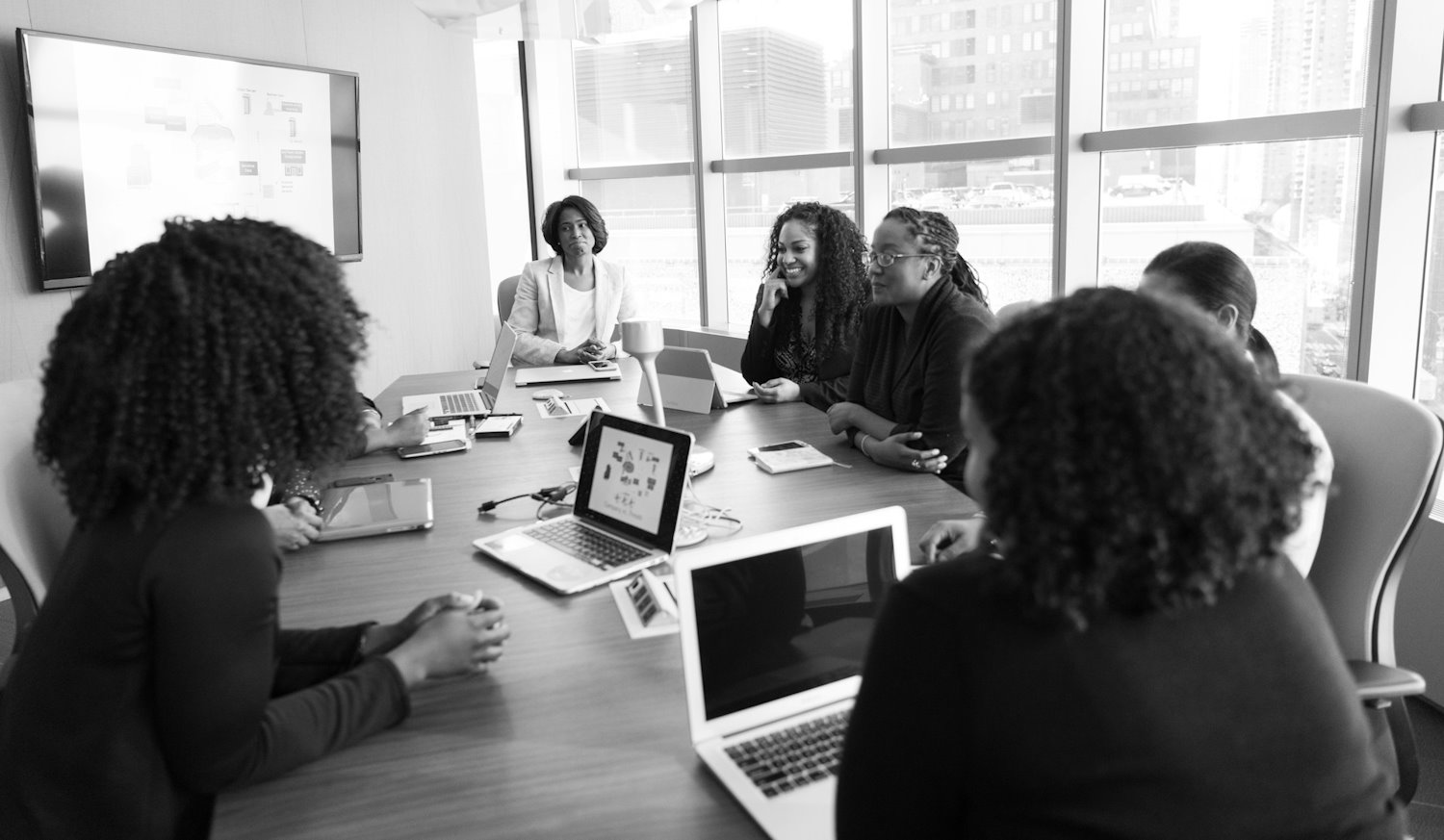
Acknowledgement: Photo – groupwork by Christina @ wocintechchat.com on Unsplash
updated: January 17, 2026